
AI;dr: Telltale signs of AI writing
It's not just a rant—it's a guide

There’s a new acronym going around the internet that makes me so happy.
AI;dr, meaning AI-written, so didn’t read.
As a self-professed writer and a very human one, I obviously benefit greatly from people being fed-up with AI slop. I love writing and get a ton of joy from spending hours in front of the keyboard or my notebook.
For the rest of y’all, though, AI;dr may be a good reminder to edit your AI-assisted writings, and even what you write without it. A former colleague of mine once predicted that human speech and text would start to mimic AI before we realized the value of self-expression and swung back. It was depressing to hear at the time, but it turns out he was right. We actually have to try to sound human now.
I think I can help. I’ve noticed just a few of the telltale signs of AI-generated text, which I’ll share below so you can edit these out of your own writing if/ when needed. But first, a note about my own use of AI:
Do I use AI to write?
For all my friends and family who continue to ask this question, let me definitively answer once more in this most public of forums:
No, I do not use AI to write.
I do not use it to plan what blogs I will write, or what backstory the characters in my novel should have.
I do not see any point in me e-mailing you every week with a copy/paste of my friendly robot’s musings and passing it off as my own. You deserve better.
I do not stare at an empty page and crave the sweet release of ChatGPT telling me, “here’s a quick outline of ideas you can consider. Want me to write one of these into paragraph form?”
(I do not eat green eggs and ham)

But that’s a specific decision I make as a person who’s dedicated to writing as an art form—not as a function of my job, nor a hobby, nor any means to an end. I believe that art is a form of individual expression. Our limitations and idiosyncrasies are precisely what make art interesting.
Now, if there are people reading this who want to argue that I could train an AI on my writing style until it matches almost perfectly, then my ethical stance aside, I have to ask in return: You want me to give a machine, owned by someone else, the ability to reproduce text that sounds so much like me that my friends and family couldn’t tell the difference, and keep it on the internet, while I go about trying to make money from the words I write? Why the fuck would I do that?
AI produces an average of all the writing it has ingested/ plagiarized. That may well be useful for some, and here is a good example of that. But I don’t care for it.
If you’d like to receive this message from someone more attractive, here’s a recent viral video of Ben Affleck and Matt Damon talking about AI:
To be clear, I’m not a Luddite about these matters. I spent 5 years working in emerging tech research. I was super excited to test out AI chatbots when they became available. I made little pieces of art with Dall-E that are still hung up on my wall. I used AI chatbots for work e-mails, cover letters, generating first drafts based on research documents—all that and more.
I even tested its ability to give me feedback on my fiction. It was absolute shit. It either wanted me to write like it did, or it validated everything I did to a fault, like I was an incel in need of an AI girlfriend.
Having tested it, and thought about it, I know where I stand on the topic.
But that’s just me. I fully understand why many of you need to use it for writing, especially for work.
You’re not creating art when you have to write a nice but stern e-mail telling people not to microwave fish in the break room. You’re not about to win the Pulitzer for meeting notes that no one is going to read.
Often, you just need to communicate within certain constraints, and AI absolutely helps you do so. But you don’t have to sound like a machine.
AI-isms to avoid
1. Not this, but that
A very common thing I see is AI trying to manufacture clarity and epiphany by stating that something is not X, but Y. Here are some examples straight from LinkedIn, because it is the official hellsoup of AI slop. No influencers were harmed in the writing of this post (yet).
Exhibit A:

Exhibit B:
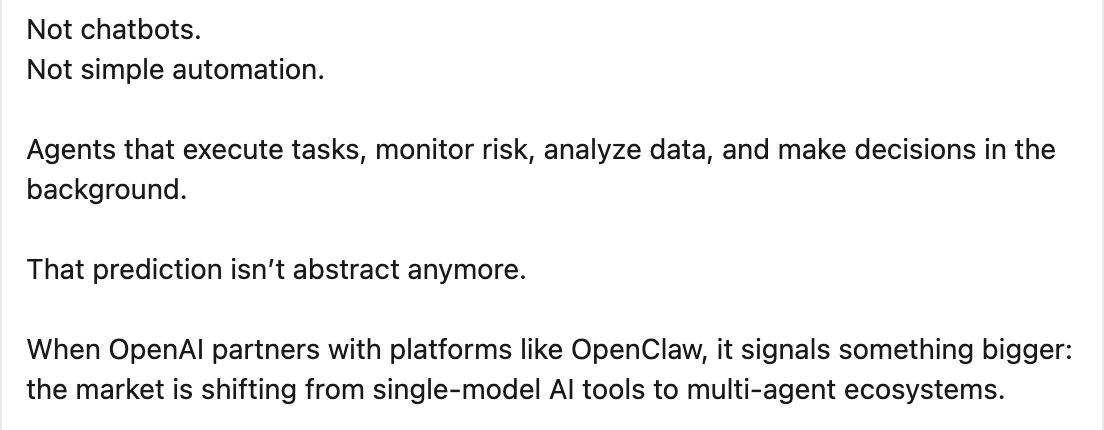
It can be absolutely valid to use this sort of construction, but it works better when you ease into it instead of bombarding the reader with emphasis. AI often does it this way because its more optimized for social media, but if you’re writing for anything other than that, you want to present your evidence upfront and then use this sort of construction as a summary with emphasis. If you do that, it’s not just an empty claim, its a conclusion (see what I did there?)
2. Rapid, repetitive sentences
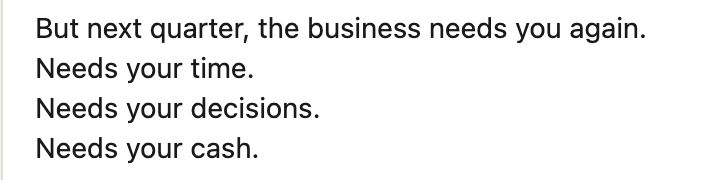
Rapid, repetitive sentences can manufacture urgency and emphasis. It’s often done with just 2-3 words per line, which is supposed to make us believe these are important and wise.
Like this other LinkedIn example:
Or this:
They react. They disagree. They deflect. They ask a different question.
But they don’t echo back what was just said.
You want to use this construction sparingly as a way of perhaps conveying emotion (see above), something shocking, or just breaking up the text.
The visual of short lines automatically makes the reader pause, so make sure they pause for a good reason. Otherwise, it gets exhausting reading tons of these sentences, just as it gets exhausting reading long ones. Hence, AI;dr.
3. Vocabulary
According to the study I linked at the outset of this blog, there are a few key words used often by ChatGPT that give away your usage:
delve
intricate
realm
underscore
I’d like to add “quiet” and “whisper” to the list, as I see so many Notes and posts on Substack that overuse those words or apply them in weird places.
Most importantly, though, keep your vocabulary true to yourself. For example, my Dad once sent me a message with the word “sassy” in it, which he has never used in his life. I immediately knew it was AI.
4. The dreaded dash
I really hate this one, because I love the em dash. Commas are beautiful, curvaceous beasts, but oh, that dash—what a revelation!
The AI giveaway is usually that the em dash is used over and over in quick succession, or for points that could be made with more varied sentence structure. For example:
Each of these pieces sparked curiosity, reflection, and discussion—exactly what our Substack is all about.
Feeling inspired? Don’t wait—step up as a new volunteer in 2026 and add your voice to the blog!
There are plenty of good reasons to use an em dash, and people who like writing use them a lot. That’s the entire reason AI uses them, because it’s regurgitating.
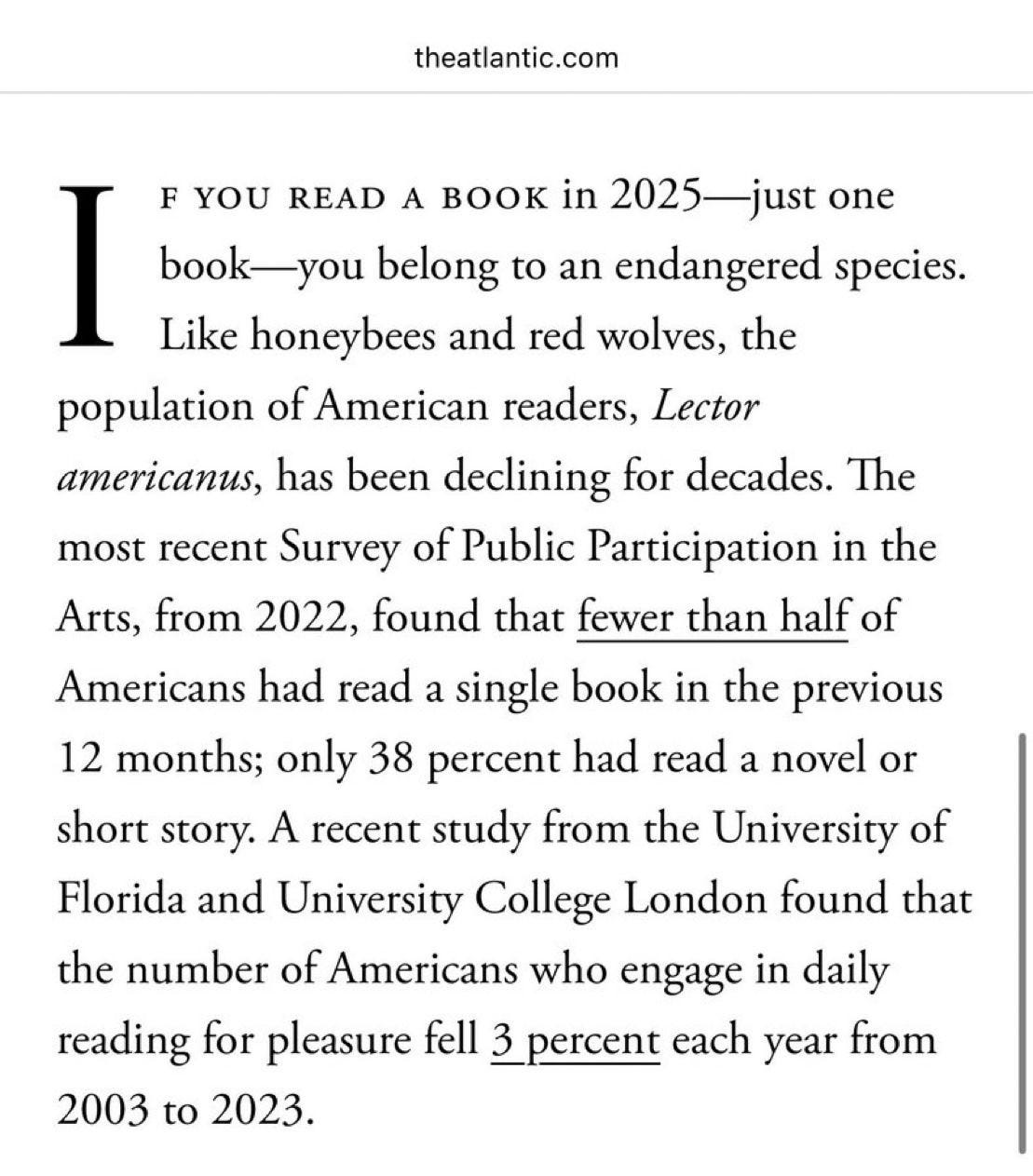
If you’re going to use it, use it well, as you see on display from magazines like The Atlantic or similar joints:
5. Lack of voice
Here’s the most important one. If, for all of the above, you would argue that Claude doesn’t have these problems, or that the newest version of DeepMoltClaw (if you get this joke, GET A LIFE) could’ve written this blog way better, you still can’t get around the problem of voice.
Voice is a really advanced and tricky concept in writing. It’s a sense of a writer’s unique style. In the same way that we all have individual speech patterns or dialects, we tend to write in certain patterns as well. That’s a good thing—your personality is coming across in the written word.
With AI, that is often erased. For instance, there’s a particular way Indians in India will write in English, including certain constructions and words that you just wouldn’t see here (like “please do the needful”). If I receive a message from a person who would typically use such patterns, but instead it sounds artificially American, and therefore voiceless coming from them, it’s a reason to AI;dr.
In the same vein, as you use AI in your work, beware of erasing yourself. Whether it’s e-mails or Slacks or reports, there’s value in preserving your voice, even if it has to be within the bounds of acceptable style for your organization. After all, you wouldn’t go to the office and suddenly start imitating the accents of everyone in the cubicles around you (I hope).
If we let AI do all our communication for us, if we sacrifice all of our uniqueness to the oppression of the palatable mean, the only people who win are the tech companies themselves, who will then have all the more reason to point to the wreckage and say: who needs to hire humans? Our AI sounds the same.

As I mentioned above, this is just a start. If you’ve got other telltale signs of AI in mind, I’d love to hear them:
My hope is that internet terms like AI;dr are a start of the tide turning, given the general societal feeling of “Ugh” over AI billionaires, robot Super Bowl ads, and ubiquitous bland text/ images. AI is absolutely an incredible tool, and I hope we benefit a lot from it as a society, because its not going away.
But it should be just a tool. When we let it communicate on our behalf, we let it become our personality. I, for one, am not okay with that.
Sincerely,
Abhijith
I love when you write about these topics because you're not just another person ranting about how AI is going to destroy us. You understand the power and potential of technology while reminding us to use it thoughtfully in ways that preserve and strengthen our humanity. Thank you.
Really enjoyed this piece, Abhijith! It's useful as well as fun to read; and I enjoyed the many little cutaway jokes ("GET A LIFE") and the like.
One question for you: In your opinion, to what extent are the attributes you associate with AI writing (which I think you rightly associate) also associated simply with writing optimized for social media? For instance, LinkedIn is chock full of AI slop, or what appears to be AI slop. But could it be that what works on LinkedIn (for now) is also just... slop? Like irrespective of its provenance?